
The Invisible 12th Man: Juju in African Football
Why does juju still haunt African football? Uncover the psychological warfare behind Nigeria's live chickens, Senegal's magic towels, and CAF's fight to banish witchcraft from the pitch.
By
The Editorial Desk
Section
Football
Status
Published article
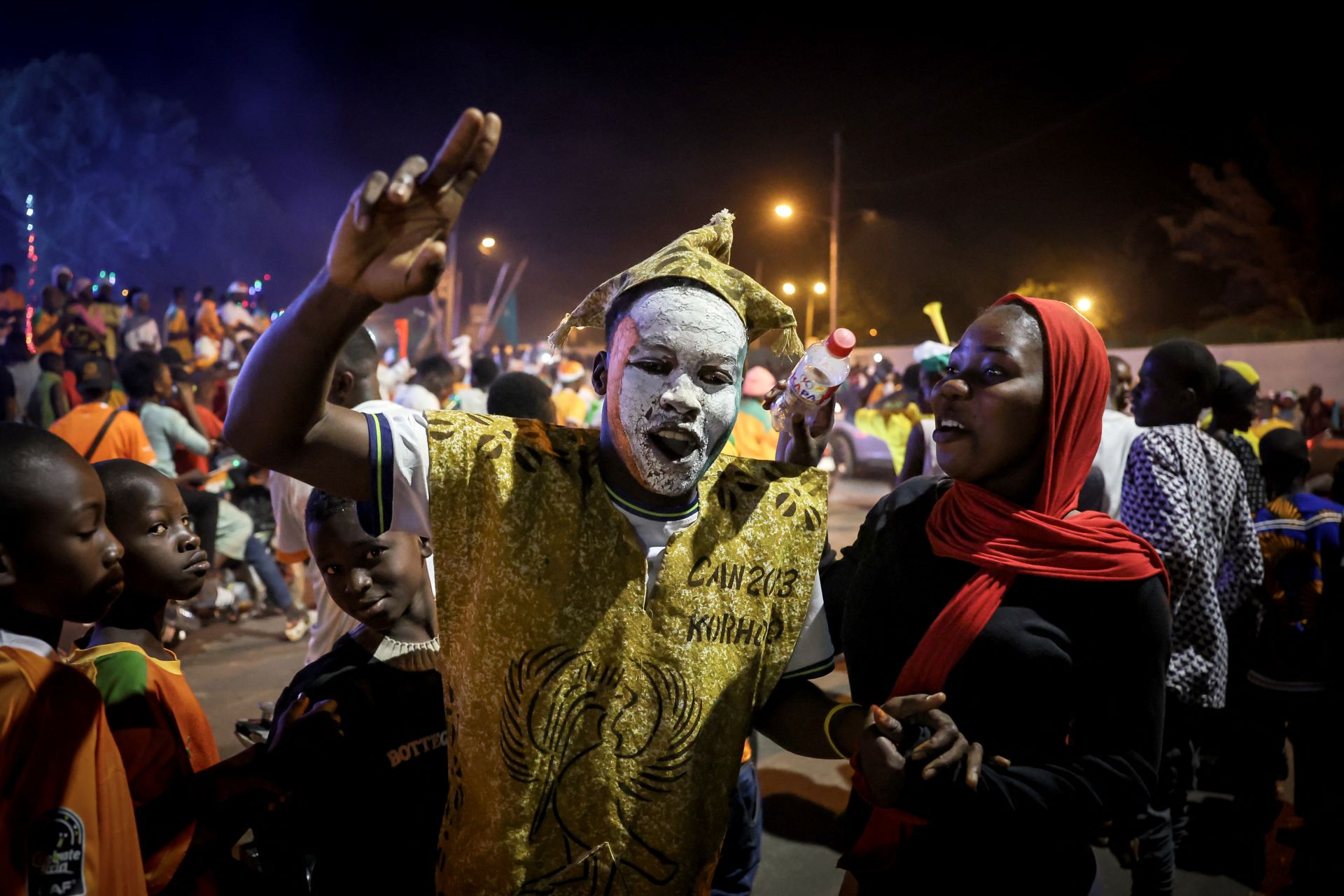
Photo by Getty Images / https://newlinesmag.com/
In the vibrant, rhythmic, and fiercely passionate world of African football, the game is often decided long before the referee blows the first whistle. While modern football is increasingly defined by data analytics, tactical periodization, and sports science, a shadow still lingers in the dressing rooms and tunnels across the continent: the deep-rooted fear of juju.
For many teams, the opposing lineup isn't the only threat on the pitch. There is a profound, underlying anxiety about the unseen forces that might be manipulating the ball, blinding the goalkeeper, or draining the energy of a star striker. But why does this fear of witchcraft and charms hold such a relentless grip on the beautiful game in Africa?
The Psychology of Fear and Belief
To understand the fear of juju, you have to look beyond the pitch. In many parts of sub-Saharan Africa, belief in the supernatural is woven into the cultural fabric. Football, being a mirror of society, naturally absorbs these beliefs.
When a team fears juju, they are dealing with psychological warfare. Sports psychologists often point to the "nocebo effect," the phenomenon where negative expectations lead to negative outcomes. If a striker genuinely believes that a rival team's witch doctor has cursed his boots, his confidence shatters. He hesitates for a fraction of a second, misses a crucial chance, and immediately attributes the failure to the spell rather than his own nerves.
From Live Chickens to Magic Towels
This psychological warfare manifests in highly visible, often bizarre physical rituals designed either to cast a spell or to break one.
In Nigeria, the battle against the dark arts often takes a feathered form. It is a common, deeply entrenched practice for fans or team affiliates to smuggle a live chicken into the stadium. The belief is that the presence of the chicken, or sometimes the act of releasing it, will "dilute" and neutralize the witchcraft spell cast by the opposition. This practice is so fiercely guarded that it became a global talking point during the 2018 World Cup, when Russian authorities had to formally deny Nigerian supporters from bringing live chickens into the arenas.
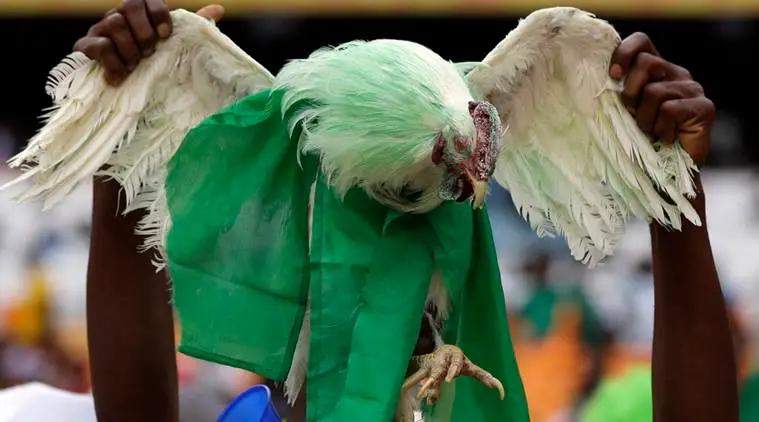
Meanwhile, in Senegal, the focus shifts from livestock to laundry. The sight of a Senegalese goalkeeper tying a specific towel to the back of his goalpost is enough to send ripples of anxiety through an opposing team. Rumored to be deeply enchanted by marabouts (spiritual guides), the towel is believed to act as an invisible shield, granting the team supernatural defensive powers and physically preventing the ball from crossing the line. It is not uncommon to see matches erupt into chaotic brawls simply because an opposing striker tried to snatch the towel away to break the hex.
High-Profile Panic on the Pitch
These incidents are not isolated to local village tournaments; they disrupt the biggest stages. East African football fans are intimately familiar with this theater. The Kariakoo Derby in Tanzania between Simba SC and Yanga has seen it all. In the mid-2000s, the Tanzania Football Federation (TFF) had to step in and ban the use of witchcraft after matches became spectacles of strange rituals, players breaking eggs on the pitch or urinating on the field to "neutralize" the opposing team's magic.
More recently, in 2023, Simba SC made continental headlines when videos circulated of players and officials seemingly performing rituals, burning substances and rubbing liquids on goalposts, during a CAF Champions League match. When players see an opponent engaging in these acts, it signals that the opponent is operating with a perceived supernatural advantage, shifting the mental balance of the entire stadium.
The Cost of the "Dark Arts"
The reliance on juju is not just a psychological crutch; it is an economic drain. There have been reports across the continent of club executives prioritizing the payment of "spiritual consultants" over player wages. In Tanzania, reports once indicated that some clubs were spending upwards of $5,000 on witchcraft services for a single crucial match.
This reveals a crisis of confidence in human agency. When a club believes that victory is secured by a witch doctor rather than a youth academy, tactical training, or proper nutrition, the development of the sport stagnates. It sends a dangerous message to young players: your talent and hard work are secondary to spiritual manipulation.
CAF’s Battle Against the Unseen
The Confederation of African Football (CAF) has recognized the damage this fear causes to the integrity of the sport. In 2023, CAF issued explicit regulations banning all forms of sorcery, witchcraft, and ritual manipulation during matches.
The fact that a continental governing body in the 21st century must legislate against witchcraft speaks volumes about how stubborn these practices are. CAF’s stance is clear: rituals violate the spirit of fair play and expose the sport to ridicule, while leaving players emotionally vulnerable.
Trusting the Process, Not the Potion
African football is producing some of the greatest talents the world has ever seen. The continent possesses the skill, the passion, and the athleticism to dominate global football. But to reach that next level, the mindset must evolve.
The fear of juju is ultimately a fear of the unpredictable nature of football itself. Embracing modern sports psychology, trusting in rigorous training, and believing in the sheer power of African talent is the only way to banish the invisible 12th man for good. The magic of African football should come from the boots of its players, not the potions of a witch doctor.